

Hi! I’m Anita, an artist who works predominantly in coloured pencil. This medium suits my realistic style and my passion for details. As an animal and nature lover all my life it was natural for me to gravitate towards these subjects in my art. I mostly portray South African wildlife and in particular birds along with the flowers found in their natural habitats. Alongside this I also draw commissioned pet portraits as I find it very rewarding being able to capture the soul of a beloved animal.
Whilst there are many different papers and pencils available to use, I’m sharing my personal preferences which will hopefully be of interest to anyone curious about this medium.
Every artist will tell you that they have their own personal paper preference and this largely depends on the techniques used by the artist. Whilst some artists prefer smoother papers, I personally only use Clairefontaine Pastelmat which I buy in sheets. This paper has a slightly grainy but still soft surface and it’s claim to fame is its ability to hold many layers of pencil. Originally it was developed for pastel artists and isn’t always liked by coloured pencil artists as it can take a bit of getting used to, however for me it was a game changer. When first using coloured pencils, I tried many different papers but it wasn’t until I discovered Pastelmat that my drawings started coming to life. The way I work is to build up the artwork over many layers each giving more depth and realism to the piece and sometimes feels a bit like sculpting. This paper allows me to build up a somewhat 3 dimensional appearance to my work and very importantly allows me the use of light over dark which is not always possible on some of the other papers. Pastelmat is archival and acid free and is sturdy so can take most techniques including the use of water.


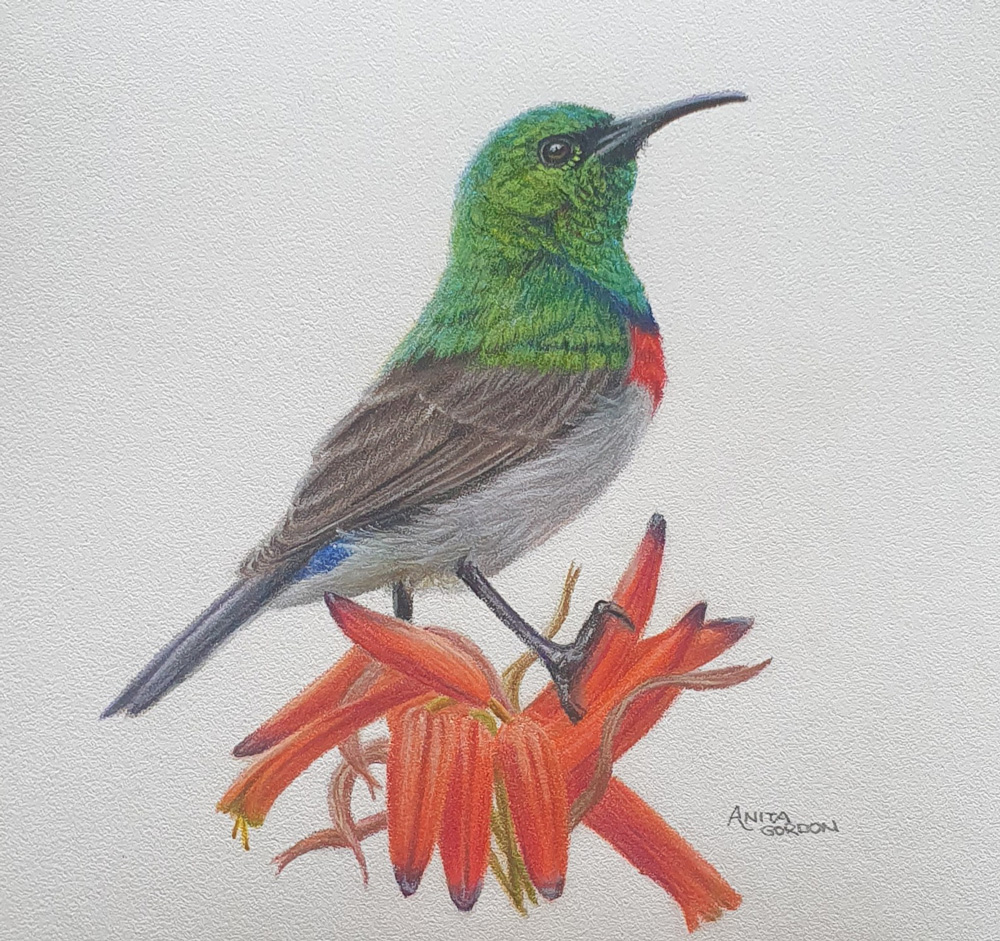
There are many different brands of pencils on the market and again different artists have different preferences depending on their subject, style, technique and paper choice. One of the most important things to consider if you are planning to sell your artwork is the lightfast ratings of the pencils which means the colours won’t fade over time. All good, artist quality pencils will list their lightfast ratings per colour. Through years of trial and error, I have two clear favourites being Faber Castell Polychromos and Caran D’ache Museum Aquarelle. The latter are watercolour pencils but I use them dry for the most part. I prefer a more dry, less waxy pencil and these two pencils suit my techniques. The Polychromos have an amazing choice of colours, hold a nice point and have a translucency to them which really helps when getting colours to shine through other colours. The Museum Aquarelle on the other hand are opaque and very pigmented and they have a thicker lead than the Polychromos. They help me to build volume and are better for covering larger areas. Due to them being watercolour pencils, I have the added advantage of using them with water as a glaze or underpainting if I so choose.

Although coloured pencils are my main medium of choice, I will use other mediums in combination with my pencils when I feel they are of benefit. I love that these mediums can work together and compliment each other. Pan pastels are useful on larger pieces and I sometimes use them as a base layer on large areas that would otherwise take a long time to cover in pencils alone. Although I don’t often do a background on my work, they are widely used by coloured pencil artists for this purpose. I also find them very useful over pencil to enhance shadows. I don’t have a lot of experience with soft pastels but I have used them periodically – usually to give a more dramatic highlight or in a background. Recently I have also started to use gouache paint in my work. When working with coloured pencil, it’s not always easy to get a bright white highlight so gouache allows me to do this by painting on white gouache with a small brush. I may also use gouache in other colours when I feel I just can’t achieve a bright enough look in pencil alone. I will usually glaze pencil over the gouache once the paint has dried to give a more natural look and blend it in to the rest of the piece.
Firstly a kneadable eraser is a must for softening edges and pulling out colour. If I have gone too dark in an area I can lighten the pigment by dabbing the eraser over the area and lifting some of the pigment off the paper. It’s also really useful for softening, for example the stray hairs on an animal can be lightened and softened by rolling the eraser over them.
Secondly I like the manual pen cutter tool made by Slice. This is a craft knife with a ceramic blade that can be used to scratch out tiny detail that would be difficult to get with pencil. It works best once there are quite a few layers of pencil already on the paper . The idea is to remove the top layer of pencil and expose the colour underneath. It can be used on thicker more sturdy surfaces but may tear some thinner drawing papers. I find myself mainly using it to help create tiny feather or fur texture or to pull out a highlight in a small area. I will usually soften the area afterwards with a bit of pencil over the top.
In conclusion, I hope there has been a useful tidbit somewhere in amongst this that has helped or inspired someone to try the medium of coloured pencils.